Self Employment
Do I Need to Pay Tax on Vinted Sales?
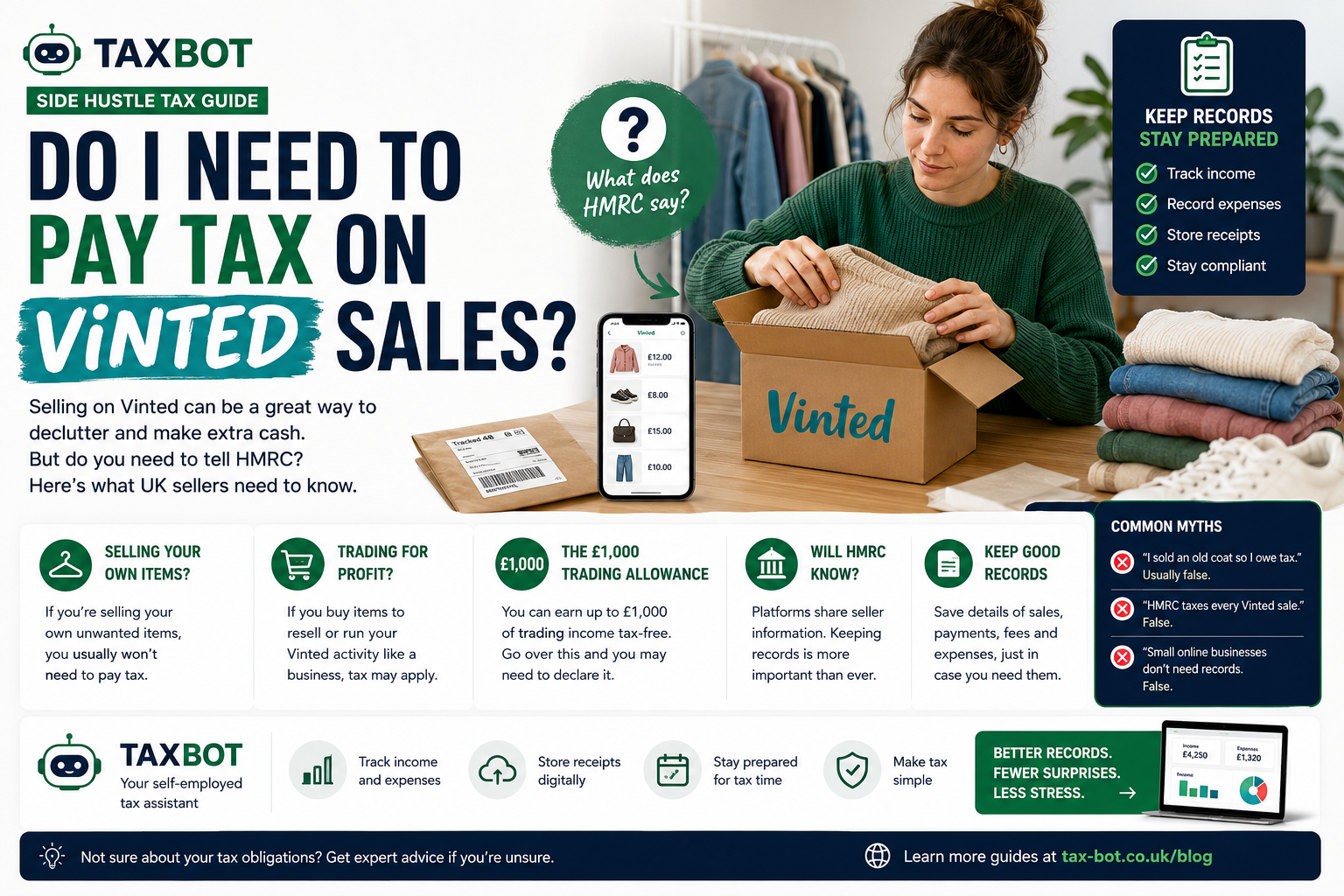
Do I Need to Pay Tax on Vinted Sales?
With millions of people using Vinted to sell unwanted clothes, shoes and household items, one question appears in Google more than almost any other side-hustle tax query:
👉 Do I need to pay tax on Vinted sales?
The good news is that for many casual sellers, the answer is:
👉 Probably not.
However, there are situations where selling on Vinted could create a tax obligation.
Here's what UK sellers need to know.
Selling Your Own Unwanted Items
Most people use Vinted to sell personal belongings they no longer need.
Examples include:
Clothes
Children's toys
Shoes
Books
Household items
If you're simply selling your own possessions, HMRC will generally not treat this as a business.
In many cases, there is no tax to pay.
When Could Vinted Sales Become Taxable?
Things become different if you're selling with the intention of making a profit.
For example:
Buying items to resell
Flipping branded clothing
Running a regular online business
Making products to sell
In these situations, HMRC may consider you to be trading.
What Is HMRC Looking For?
There is no single rule that automatically makes someone a business.
HMRC may look at factors such as:
Frequency of sales
Intention to make profit
Buying stock specifically to resell
Organisation of activities
Business-like behaviour
The more commercial your activities become, the more likely they are to be treated as trading income.
What About the £1,000 Trading Allowance?
The UK has a Trading Allowance that allows many people to earn up to £1,000 of trading income in a tax year.
If your trading income exceeds this amount, you may need to:
Register for Self Assessment
Keep records
Submit a tax return
This is why many side hustlers should understand the allowance before their sales start growing.
Will HMRC Know About My Vinted Sales?
Online platforms are increasingly required to collect and share information about sellers under international reporting rules.
This doesn't automatically mean tax is due.
However, it does mean that keeping accurate records is becoming more important than ever.
What Records Should Vinted Sellers Keep?
Even if you're unsure whether your activity is taxable, it's sensible to keep records of:
Sales
Payments received
Postage costs
Purchase costs
Fees charged by platforms
Good records make it easier to understand your position if your sales increase.
Common Vinted Tax Myths
Myth 1:
"I sold an old coat so I owe tax."
Usually false.
Selling your own unwanted belongings is generally different from trading.
Myth 2:
"HMRC taxes every Vinted sale."
False.
Tax depends on the circumstances, not simply the platform being used.
Myth 3:
"Small online businesses don't need records."
False.
Good records are essential regardless of business size.
A Simpler Way to Track Side Hustle Income
If your Vinted sales are growing, organisation becomes important.
With TaxBot, you can:
Track income
Record expenses
Store receipts
Keep digital records
This helps you stay prepared if your side hustle grows into a business.
Final Thoughts
Most people selling a few unwanted items on Vinted will not suddenly receive a tax bill.
However, if you're regularly buying and selling for profit, different rules may apply.
👉 The safest approach is simple:
Keep good records and understand when your hobby starts becoming a business.
Disclaimer
This article is for general information purposes only and does not constitute tax, legal, or financial advice. Tax rules can change and individual circumstances vary. Always consult a qualified UK tax adviser or accountant for advice tailored to your situation.
Handle your MTD returns automatically
Snap receipts, log income, submit to HMRC — all from Telegram.
Try TaxBot →