HMRC Guides
How Long Do You Need to Keep Tax Records in the UK?
How Long Do You Need to Keep Tax Records in the UK?
Whether you're self-employed, a CIS subcontractor, landlord or side hustler, keeping good records is one of the most important parts of managing your taxes.
Yet many people ask:
👉 How long do I actually need to keep tax records?
The answer depends on your circumstances, but HMRC has clear rules that every taxpayer should understand.
Why Does HMRC Require Records?
HMRC expects taxpayers to keep records that support:
Income received
Expenses claimed
Tax returns submitted
CIS deductions
Rental income
Business transactions
These records help prove that the information on your tax return is accurate.
How Long Should Self-Employed People Keep Records?
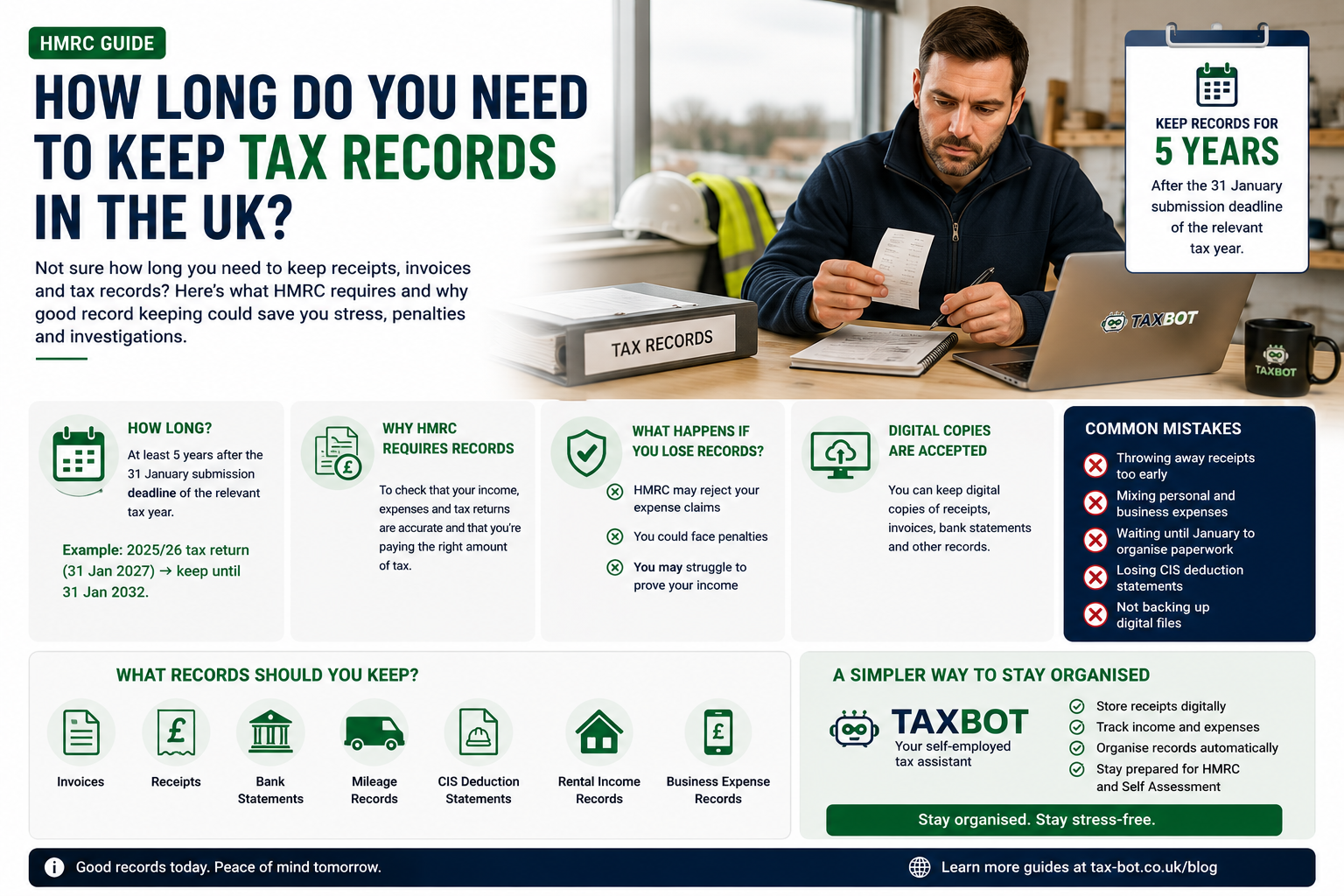
If you're self-employed and submit a Self Assessment tax return, HMRC generally requires you to keep records for:
👉 At least 5 years after the 31 January submission deadline of the relevant tax year.
For example:
If you submit a 2025/26 tax return by 31 January 2027, you should normally keep records until at least 31 January 2032.
What Records Should You Keep?
Examples include:
📄 Invoices
🧾 Receipts
🏦 Bank statements
🚐 Mileage records
💷 CIS deduction statements
🏠 Rental income records
📱 Business expense records
The more organised your records are, the easier it becomes to deal with tax returns and HMRC queries.
What Happens If You Lose Records?
Missing records can create problems if:
HMRC asks questions
You need to prove expenses
You're selected for a compliance check
You want to maximise your tax deductions
Without evidence, HMRC may reject some expense claims.
Can Digital Copies Be Kept?
Yes.
Many taxpayers now store:
Photos of receipts
PDF invoices
Digital expense records
Online bank statements
Digital storage often makes record keeping easier than paper files.
Why Good Record Keeping Saves Money
Poor organisation often causes people to:
Miss expense claims
Forget deductible purchases
Underclaim mileage
Overpay tax
Good records help ensure you claim everything you're entitled to.
Common Record Keeping Mistakes
❌ Throwing away receipts too early
❌ Mixing personal and business expenses
❌ Waiting until January to organise paperwork
❌ Losing CIS deduction statements
❌ Not backing up digital files
A Simpler Way to Stay Organised
With TaxBot, you can:
Store receipts digitally
Track income and expenses
Organise records automatically
Stay prepared for HMRC and Self Assessment
Instead of searching through paperwork months later, everything stays in one place.
Final Thoughts
Keeping good tax records isn't just about compliance.
👉 It's one of the easiest ways to reduce stress, avoid mistakes and make tax returns much easier.
The safest approach is simple:
Keep everything organised from the start.
👉 Want an easier way to manage receipts and tax records?
Try TaxBot and keep everything organised all year round.
Handle your MTD returns automatically
Snap receipts, log income, submit to HMRC — all from Telegram.
Try TaxBot →