Self Employment
I Earned Over £1,000 From a Side Hustle – What Do I Do Now?
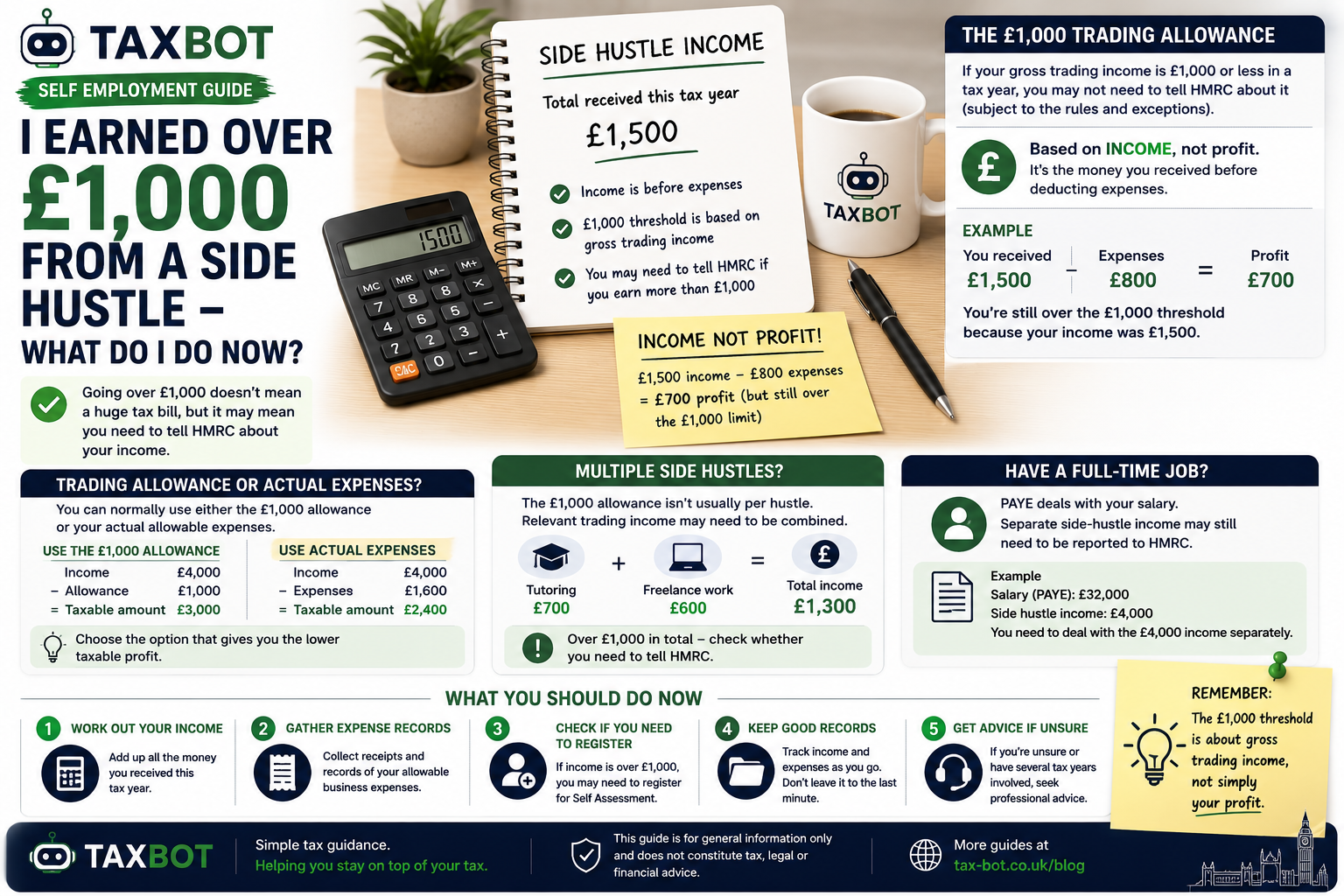
I Earned Over £1,000 From a Side Hustle – What Do I Do Now?
Maybe your side hustle started as a bit of extra money.
A few freelance jobs. Some tutoring after work. Selling handmade products online. Weekend beauty appointments. Deliveries. Photography. Gardening. Baking cakes.
Then you add everything up and realise:
I've earned more than £1,000. Do I need to tell HMRC?
Don't panic.
Going over £1,000 doesn't automatically mean you have a huge tax bill. But it is an important point because you may now need to tell HMRC about your income.
Here's what you need to know.
What Is the £1,000 Trading Allowance?
The Trading Allowance is a tax allowance of up to £1,000 a tax year for certain trading, casual and miscellaneous income.
For someone running a small side hustle, it can mean that if your qualifying gross trading income is £1,000 or less, you may not need to tell HMRC about it.
However, there are exceptions, and the allowance doesn't apply in every situation.
The important thing is understanding what HMRC means by £1,000 of income.
Is the £1,000 Based on Income or Profit?
This catches a lot of people out.
The £1,000 threshold is based on your gross trading income, before expenses are deducted.
For example, imagine you sell handmade stationery.
During the tax year, customers pay you:
£1,500
You spend:
£800
on materials, packaging and other costs.
You might think:
"I only made £700, so I'm under the £1,000 limit."
But that's not how the threshold works.
Your gross trading income was £1,500.
So you've exceeded £1,000 and should check whether you need to register for Self Assessment and report the income.
Does Going Over £1,000 Mean I Pay Tax on Everything?
No.
This is another important distinction.
The £1,000 figure isn't simply a point where HMRC suddenly taxes every pound you've received.
Your actual tax position depends on your taxable profit, your other income and your circumstances.
If your trading income exceeds £1,000, you may also have a choice between using the Trading Allowance or deducting your actual allowable business expenses when calculating your taxable trading profit.
Trading Allowance or Actual Expenses?
Suppose your side hustle brings in £4,000 during the year.
Your actual allowable expenses are only £400.
Using the £1,000 Trading Allowance could potentially mean calculating your taxable trading income as:
£4,000 − £1,000 = £3,000
But imagine your actual allowable expenses were £1,600.
Using actual expenses could instead give:
£4,000 − £1,600 = £2,400
In that example, claiming your actual allowable expenses could be more beneficial.
You generally cannot deduct the £1,000 Trading Allowance and then claim your actual business expenses against the same income.
It's normally one method or the other.
What If I Have More Than One Side Hustle?
Be careful here too.
You shouldn't automatically assume that you receive a separate £1,000 Trading Allowance for every little business or side hustle you have.
For example:
Tutoring: £700 Freelance design: £600
Total trading income:
£1,300
Even though neither activity individually generated more than £1,000, you may need to consider the relevant trading income together.
What If I Already Have a Full-Time Job?
Having a PAYE job doesn't mean your side-hustle income is automatically dealt with.
Your employer normally deducts Income Tax from your salary through PAYE.
They don't automatically know that you've earned another £3,000 designing websites, tutoring, delivering food or selling handmade products.
For example:
Employment salary: £32,000 Side-hustle income: £4,000
The £32,000 salary may already have tax deducted through PAYE.
But you still need to deal with the separate £4,000 of trading income correctly.
What Should I Do If I've Gone Over £1,000?
Start by working out exactly how much you received.
Don't guess.
Look through your:
Bank transactions
PayPal or other payment accounts
Online selling platforms
Invoices
Cash payments
Booking systems
Sales records
Work out your total gross trading income for the relevant tax year.
Remember that the UK tax year runs from 6 April to 5 April.
Then start organising your expenses.
What Expenses Should I Record?
If you're going to claim actual business expenses rather than the Trading Allowance, good records become particularly important.
Depending on your business and HMRC's rules, potentially allowable expenses could include things such as:
Materials and stock
Postage and packaging
Platform fees
Advertising
Business software
Certain travel costs
Professional fees
Office costs
Certain phone costs
Equipment used for the business
Not everything you buy while running a business automatically becomes a tax-deductible expense.
Personal spending generally cannot simply be put through the business because you happen to be self-employed.
Where something has both business and personal use, additional rules can apply.
Do I Need to Register as Self-Employed?
If you're trading as a sole trader and your gross trading income is more than £1,000 in the tax year, you will generally need to check whether you must register for Self Assessment.
Don't assume that being employed elsewhere means you don't need to register.
You can be employed and self-employed at the same time.
What If I Only Went Over £1,000 by a Few Pounds?
The same rules still need to be considered.
If you received:
£1,005
you shouldn't simply ignore it because you were only £5 over.
However, exceeding £1,000 doesn't mean HMRC automatically sends you a bill or penalty.
It means you need to check your reporting obligations and deal with the income correctly.
What If I Went Over £1,000 Last Year and Didn't Tell HMRC?
This is where it's especially important not to bury your head in the sand.
Perhaps you've just discovered that you earned:
£1,800 last year
or maybe you've been earning a few thousand pounds from a side hustle for several years without realising you may have needed to report it.
Start by working out what happened.
For each affected tax year, establish:
Your total income
Your business expenses
Your approximate profit
What records you still have
Whether you submitted a tax return
Whether the income should have been reported
If you think you should have declared income in previous years, take action rather than waiting for HMRC to contact you.
If several tax years are involved or you're unsure how to correct your position, getting professional tax advice can be sensible.
What If I Sell on Vinted, eBay, Etsy or Facebook Marketplace?
Selling something online doesn't automatically make you a business.
There's an important difference between:
selling your own unwanted possessions
and
buying, making or acquiring things with the intention of selling them for profit.
For example, selling your children's old clothes or an unwanted sofa is very different from regularly buying products specifically to resell them.
The tax position depends on what you're actually doing, not simply which platform you're using.
Can Online Platforms Give My Information to HMRC?
Certain digital platforms have reporting obligations and may collect information about sellers and their transactions.
But a platform reporting information does not automatically mean you owe tax.
HMRC still has to consider the nature of the activity and the relevant tax rules.
This is why you shouldn't panic simply because an online marketplace asks for your tax information.
Do I Need to Keep Receipts?
Good record keeping is one of the best habits you can establish when your side hustle starts growing.
Don't wait until your tax return is due.
Keep track of your income as it happens.
For every expense, record:
Date → Supplier → Amount → What you bought → Why it was for the business
Keep the receipt or invoice where appropriate.
Do the same with your income.
The £20 cash payment from a customer still counts just because it never arrived through Stripe or PayPal.
Should I Have a Separate Bank Account?
A sole trader doesn't necessarily need a separate business bank account purely for tax purposes.
However, keeping business and personal transactions separate can make record keeping significantly easier.
If every supermarket shop, restaurant payment, salary payment and business expense is mixed together in one account, working out your business figures later becomes much more difficult.
How Much Tax Will I Actually Pay?
Going over £1,000 doesn't tell us how much tax you'll owe.
Your eventual tax bill can depend on things such as:
Your trading profit
Employment income
Other taxable income
Personal Allowance
Income Tax band
National Insurance rules
Other allowances or deductions
Your individual circumstances
Someone making £3,000 from a side hustle alongside a £20,000 salary can have a different tax position from someone making the same £3,000 alongside a £70,000 salary.
Does Going Over £1,000 Mean I Have to Use Making Tax Digital?
No.
This is another area where the different HMRC thresholds can become confusing.
The £1,000 Trading Allowance and the income thresholds for Making Tax Digital for Income Tax are separate rules.
Going over £1,000 does not, by itself, mean you suddenly have to start submitting MTD quarterly updates.
You need to look separately at whether and when the MTD rules apply to you.
Five Things to Do Today
If you've just realised your side hustle has gone over £1,000, keep it simple:
Work out your total gross income.
Check which tax year the income belongs to.
Gather your receipts and expense records.
Check whether you need to register for Self Assessment.
Start keeping proper records from now on.
The worst approach is simply ignoring it because tax feels complicated.
Frequently Asked Questions
I earned £1,500 but only made £500 profit. Am I under the £1,000 limit?
Not simply because your profit was £500. The £1,000 Trading Allowance threshold concerns gross trading income before expenses.
I have a PAYE job. Do I still need to declare my side hustle?
Potentially, yes. PAYE deals with your employment income. Separate trading income may still need to be reported.
Can I claim £1,000 plus all my expenses?
Generally, you don't deduct both the Trading Allowance and your actual business expenses from the same income. You normally use the relevant method that applies to your circumstances.
I made exactly £1,000. Do I need Self Assessment?
If your qualifying gross trading income is £1,000 or less, the Trading Allowance may mean you do not need to tell HMRC about that income. There are exceptions, however, so your circumstances still matter.
Does £1,000 mean £1,000 profit?
No. This is one of the most important things to remember. The threshold relates to gross trading income, not simply the amount left after your expenses.
Will HMRC know about my online sales?
HMRC can receive information from various sources, including information reported by certain digital platforms. Your responsibility to report taxable income doesn't depend on whether you think HMRC already knows about it.
Final Thoughts
If your side hustle has just crossed £1,000, don't panic — but don't ignore it either.
Going over £1,000 doesn't automatically mean you have a huge tax bill.
It does mean it's time to take your side income seriously.
Work out how much you've actually received, organise your expenses, check whether you need to register with HMRC and start keeping proper records.
A side hustle can grow surprisingly quickly.
Getting your tax records organised while you're earning £1,000 or £2,000 is much easier than trying to untangle everything once you're earning £10,000 or £20,000.
And the key number to remember is:
The £1,000 threshold is about gross trading income — not simply your profit.
Disclaimer
This article is for general information purposes only and does not constitute tax, legal or financial advice. Tax rules, allowances and HMRC procedures can change, and individual circumstances vary. Always check current HMRC guidance or consult a qualified UK tax adviser or accountant for advice tailored to your situation.
Handle your MTD returns automatically
Snap receipts, log income, submit to HMRC — all from Telegram.
Try TaxBot →