HMRC Guides
What Is My Tax Code and How Do I Check If It's Correct?
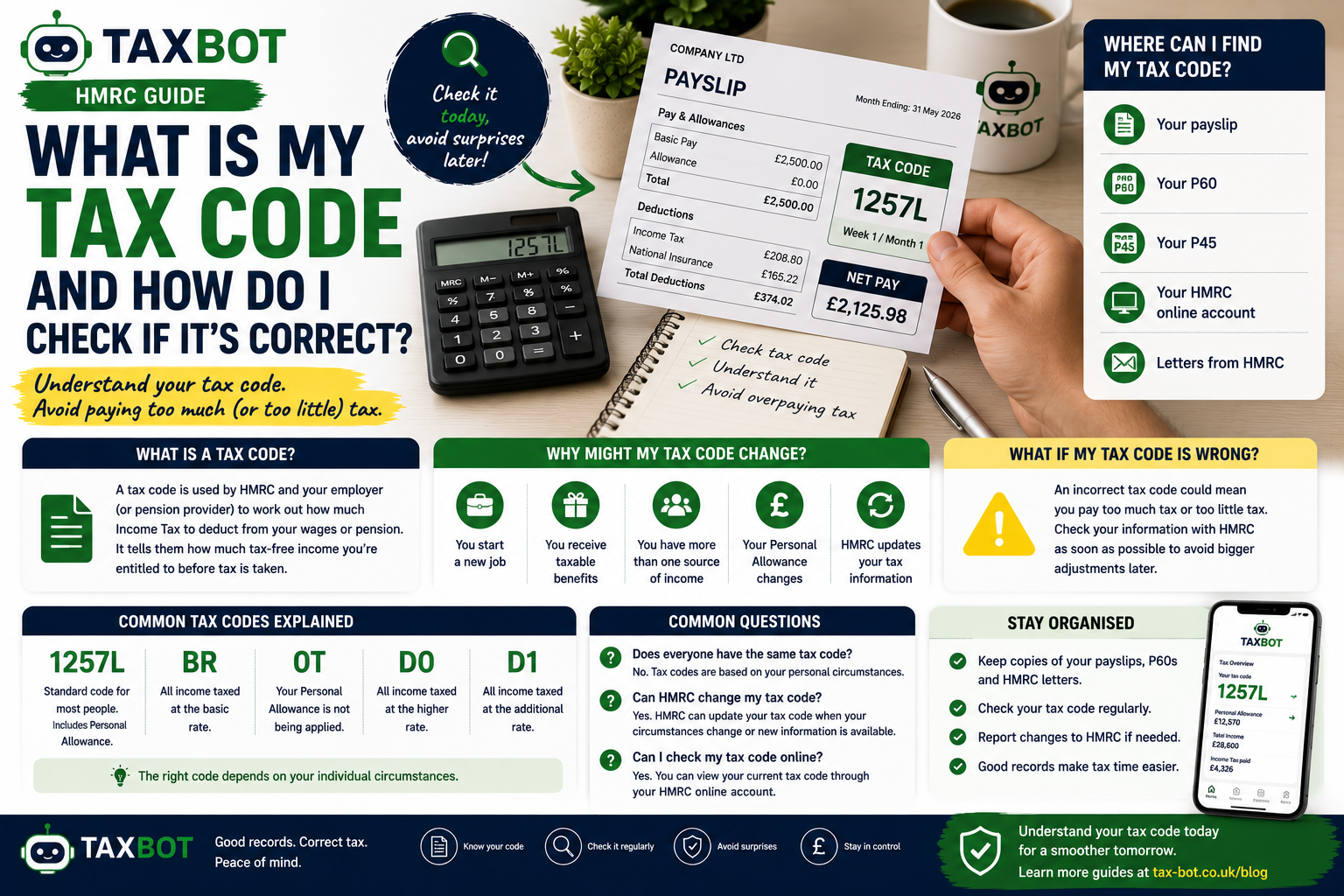
What Is My Tax Code and How Do I Check If It's Correct?
If you've ever looked at your payslip and seen a code like 1257L, you may have wondered:
👉 What does my tax code mean?
It's one of the most searched tax questions in the UK, and understanding your tax code can help you avoid paying too much—or too little—tax.
What Is a Tax Code?
A tax code is used by HMRC and your employer or pension provider to calculate how much Income Tax should be deducted from your wages or pension.
Your tax code tells them how much tax-free income you're entitled to receive before Income Tax is deducted.
Where Can I Find My Tax Code?
You can usually find your tax code on:
Your payslip
Your P60
Your P45
Your HMRC online account
Letters sent by HMRC
If you've recently changed jobs, your tax code may also appear on your first payslip from your new employer.
What Does 1257L Mean?
For many people, 1257L is the standard tax code.
It generally means you're entitled to the standard Personal Allowance and your employer is applying the usual tax rules.
However, your tax code may be different depending on your circumstances.
Why Might My Tax Code Change?
HMRC may update your tax code if:
You start a new job
You receive taxable benefits
You have more than one source of income
Your Personal Allowance changes
HMRC updates your tax information
Sometimes changes are temporary while HMRC receives updated information.
What If My Tax Code Is Wrong?
An incorrect tax code could mean you pay:
Too much tax
Too little tax
If you think your tax code is incorrect, you should check your information with HMRC as soon as possible.
Correcting errors early may prevent larger adjustments later.
Common Tax Codes
Some commonly seen tax codes include:
1257L – Standard tax code for many taxpayers.
BR – Income taxed at the basic rate.
0T – Personal Allowance is not being applied.
D0 – Income taxed at the higher rate.
D1 – Income taxed at the additional rate.
The correct code depends on your individual circumstances.
Common Questions
Does everyone have the same tax code?
No.
Tax codes are based on your personal tax situation.
Can HMRC change my tax code?
Yes.
HMRC can update your tax code when your circumstances change or new information becomes available.
Can I check my tax code online?
Yes.
You can usually view your current tax code through your HMRC online account.
Keep Your Tax Information Organised
Keeping copies of your:
Payslips
P60s
HMRC letters
Tax code notices
can make it much easier to understand your tax position and identify any changes.
Final Thoughts
Your tax code plays an important role in making sure the correct amount of tax is deducted from your income.
Checking it regularly can help you spot mistakes early and avoid unexpected tax bills or refunds.
If something doesn't look right, it's always worth checking with HMRC.
Disclaimer
This article is for general information purposes only and does not constitute tax, legal or financial advice. Tax rules can change and individual circumstances vary. Always consult a qualified UK tax adviser or accountant for advice tailored to your situation.
Handle your MTD returns automatically
Snap receipts, log income, submit to HMRC — all from Telegram.
Try TaxBot →